


Sarod
(hindustani, string instrument)
 |
 Profile
Artists  Ustad Amjad Ali Khan - Raag Pahadi |
Profile
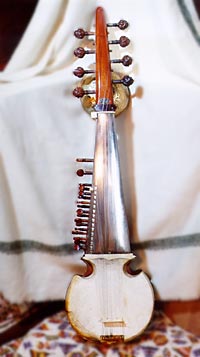
Sarod is a popular stringed instrument of hindustani music. The body is carved from a single piece of well-seasoned teakwood and the belly covered with goat skin. There are four main strings, six rhythm and drone strings and fifteen sympathetic strings, all made of metal. These are played by striking with a plectrum made of a coconut shell. The Sarod has no frets. Sarod as been found in carvings of the 1st century in Champa temple and also in paintings in the Ajanta caves. It also has a similarity with the Rabab of Afghanistan and Kashmir. The instrument was modified by Amir Khusru in the 13th century. A definite change was made by Ustad Ali Akbar Khan in shape of the instrument for improving the tonal quality.The history of the Sarod originally dates back to Afghanistan where it existed in it's primitive stage of evolution. The great sarod virtuoso Baba Alauddin Khan greatly refined this instrument, bringing the sarod into its modern configuration by adding many different features
Artists
Major artists in alphabetical order
| Musical Nirvana . com | Top | Last Updated on 21-Feb-03 |